
Written by Kirsti Formoso, MSc. Transpersonal Psychology, BSc. Psychology
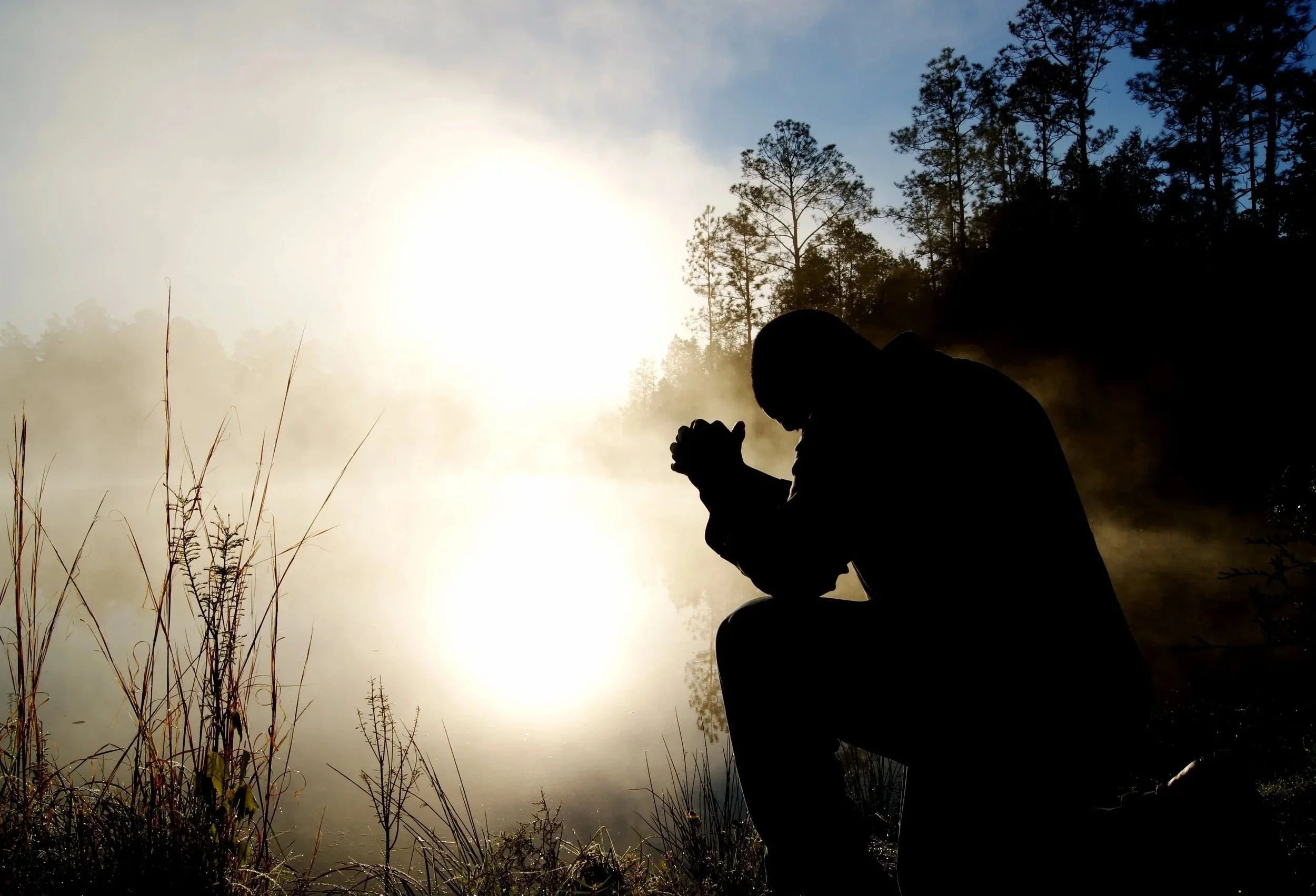
We tend to set out on our spiritual journey with high hopes of well-being, euphoric experiences, and even the ideals of enlightenment, but when we're unexpectedly met with a spiritual crisis or spiritual emergency, those dreams can feel like misguided goals we wish we’d never aimed for.
Instead of euphoria and effortless bliss, we're left with depressive thoughts, dark loneliness, and isolation. Instead of enlightenment, we're stuck in existential anxiety. And instead of purpose and ascension, we're lost, directionless, and devoid of all purpose. Instead of spiritual gifts and powers, we're tormented by spirits and heightened sensitivity. Instead of healing, we find our nervous system is more dysregulated than it's ever been.
These are not uncommon experiences on the spiritual path. Spiritual crisis and emergencies are well documented in spiritual texts and transpersonal psychology. Whatever your spiritual crisis looks like and however you feel, know that it will not last forever; it is a process and one that you can grow and evolve from.
I hope that this page will help you understand that process. I talk about the different types of spiritual emergencies, the symptoms, why they're so difficult, coping strategies, and where to find support.
What Is a Spiritual Crisis?
The spiritual awakening journey is unique; we each walk our own path. For some, it takes the form of a slow meandering path of ascension (sometimes called spiritual emergence). But for others, it explodes into our lives, shaking the very foundations we've built our lives upon, bringing with it chaos, disruption, and confusion.
Spiritual crisis and spiritual emergency are episodes on the spiritual path that are experienced as disorienting, challenging or overwhelming. Usually triggered by a profound experience such as an EHE, a spiritual crisis can lead to intense psychological and emotional upheaval as we grapple to cope with our reality being turned upside down.
Traditionally, a spiritual crisis was seen as a challenging episode following a profound spiritual experience such as a mystical experience. Today, the term is used more widely. Perhaps because today we have more access than ever to advanced spiritual practices and use them in ways that were never seen in more traditional settings.
The Difference Between Spiritual Crisis and Spiritual Emergency
People often use these two terms interchangeably. For me, I tend to conceptualise a spiritual emergency as an abrupt and short episode and a spiritual crisis as a more prolonged struggle.
For example, experiencing intense spontaneous kundalini kriyas for 24 hours that then fizzle out can be a spiritual emergency. But experiencing intense spontaneous kriyas for 3 months or more is a different story, and I think of this in terms of spiritual crisis.
Transpersonal Crises on the Spiritual Path
There are very specific experiences on the spiritual path that can, but don't always lead to spiritual crisis and emergency. When our consciousness is expanded and we transcend everyday reality and egoic conditioning our sense of reality and existence is pulled into question.
Mystical experiences are a beautiful blissful experience on the spiritual path but for many people the euphoria experienced gives way to existential anxiety, loss of meaning and purpose, loss of identity, spiritual death, and our sense of reality, especially when we begin to navigate life after the spiritual awakening.
The dark night of the soul, experienced by many after profound experiences, is a classic spiritual crisis. The similar experience of spiritual death could also be experienced as a spiritual crisis, and both are part of the broader varieties of spiritual experience that can radically alter how we see ourselves and reality.
The stirring of kundalini energy can be very challenging and disruptive and is often experienced as a crisis or emergency.
While transpersonal states tend to be more common triggers of a spiritual emergency, they are not the only triggers.
Spiritual Emergency and Spiritual Crisis Triggers
Transpersonal psychologist have studied spiritual emergency for many years. Transpersonal psychology esearchers have identified 12 categories of triggers:
Re-evaluation of your identity, culture, or spiritual community.
Existential crisis
Shamanic journey
Interdimensional beings
Karmic patterns
Kundalini experience
Psychic opening
Possession states
Near-death experiences
Dark night of the soul
Recognising a Spiritual Crisis
Spiritual crisis come in all sorts of shapes and sizes and often we don't even realise we're having one. The thing that ties them all together is that your world turns upside down and demands your full attention.
You may be experiencing:
Loss of meaning
Loss of identity
Changing world view
Sense of reality is challenged
Meaning-making is radically shifting
Feelings of disorientation and dysfunction
Past traumas resurfacing
Confusion
Physical, energetic, emotional and spiritual phenomenon
Less balanced life choices (food, exercise, scrolling)
Mood swings
Activation of trauma based coping (dissociation, hyper-arousal, depersonalisation, numbing)
When a Spiritual Crisis Is Most Intense
The peak of a spiritual crisis can be incredibly intense. Experiencing anything from heightened sensitivity, sleep deprivation, and overwhelming physical symptoms to existential dread, intense emotional turmoil, and total confusion. Trying to cope with the intensity can lead to self-absorption as they struggle to maintain any sense of stability in their lives. Often they are unable to work or attend to usual daily activities.
During these times, it may seem like they are out of touch with reality, disconnected from friends and family, and suffering from mental disorders.
Why Can Spiritual Experiences Become So Difficult?
Explore possible contributing factors, including intensive spiritual practice, existential upheaval, unresolved emotional material and the challenge of integrating experiences that radically change how we see ourselves and the world.
Today in our secular societies we have intense spiritual practices available for all on the market place. If you have the money, you can participate. This is in stark contrast to previous times in history where spiritual practices were confined to monastries and other structured institutions. Adepts gradually increased the intensity of their spiritual practices after living with very strict disciplines and having a lot of wise guidance around them.
Today we're on our own. And we're jumping in at the deep end without learning how to swim first. As a 500 RYT yoga instructor, I've been teaching breathwork for many years. I decided a few years ago to teach breathwork as a stand alone course. It was a four week course. I taught the foundations. How to breath properly, how to self-regulate, and several yogic breath practices, the kind of basics that support you to start and stabilise your spiritual journey.
The problem was, many people were learning way more advanced breathwork techniques and my students were disappointed that by the end of the course they had not learnt the more intense breathwork that was readily available, online, for free.
I just couldn't teach these advanced techniques. For me it wasn't ethical. Now today, I work with people who paid the money and now pay the price with spiritual crisis. It is not their fault. We rely on our teachers to guide us ethically but many teachers don't even realise that what they're teaching can have adverse affect for some people.
It’s not just breathwork, Kundalini yoga is often taught by under-experienced teachers unaware of the challenges that can arise. Plant medicines like ayahuasca and iboga are readily available with little preparation and integration support. Even mindfulness, touted as a cure-all for mental health, can have severe adverse affects.
Navigating these advanced techniques and tools alone without solid foundations, deep inner work preparation, or a society that understands is challenging at the best of times. Without proper deep inner work preparation and community support, spiritual emergencies and crisis are more likely and more difficult.
Altered States of Consciousness on the Spiritual Path
The most challenging and difficult spiritual crisis often come on the back of altered states of consciousness such as ego-disolution. These altered states of consciousness and transpersonal states go hand in hand with spiritual practices. Meditation, psychedelics, breathwork, extreme fasting, cold water exposure - these practices were designed to change the brain and alter our state of consciousness. But whenever we engage in practices that alter our consciousness we risk long-term challenges.
Altered states of consciousness are not only triggers for spiritual emergency but can also be very much a part of the process. This can be one of the most challenging aspects of a spiritual crisis.
Trauma Bios and Spiritual Crisis
While spiritual practices in general tend to be beneficial to mental health and well-being, there is some research that suggests that some types of meditation and mindfulness can have negative outcomes for some people with complex trauma bios, resulting in spiritual crisis and emergency, which is why an approach like spiritual psychology that integrates psyche and spirit can be so supportive.
If you have a complex trauma bio, there are many spiritual practices that support you, but you may need more support and guidance. For this reason, I'm particularly cautious about what types of spiritual retreats and meditation practices I recommend for my clients.
For example, when we do serious mindfulness practice, we turn up the volume on our inner narrative. By doing this, we can start to examine it and lessen its control over us. However, once its turned up its difficult to turn down. For someone who has an overactive and overly negative inner narrative this can be incredibly challenging. For this reason, if you do have a complex trauma bio, having an actual mindfulness teacher is better than using apps and self-directed mindfulness courses and exercises.
Spiritual Crisis and Mental Health: Understanding the Limits of a Spiritual Interpretation
Not every difficult experience is necessarily spiritual in origin, and spiritual meaning does not rule out mental-health difficulties or biological issues. It's important that you find appropriate professional support when needed, without attempting to distinguish or diagnose conditions yourself.
I recognise that western medicine is not very spiritually informed and that finding GPs, psychiatric support and other mental health professionals that are well versed in spiritual matters can be extremely difficult. As a result spiritual crisis can be misdiagnosed as mental disorders.
However, many of my clients have found that they can have constructive conversations about what is arising with their GPs and therapists. As spirituality becomes more mainstream more traditional medical practitioners are becoming more open minded and more able to support people in spiritual crisis.
Ruling out other conditions is important. Some symptoms that appear to be spiritual can actually have neurological and biological causes.
It's important to stay open minded. While many spiritually inclined people are adverse to pharmaceutical medication, at times of severely challenging spiritual crisis some medication can give some relief so shouldn't be ruled out all together. Similarly, I've had clients who have benefited from more traditional support such as cognitive behaviour therapy and other therapeutic interventions.
Ultimately, if you are having a spiritual crisis, I recommend creating a team of professional support around you that bridges psychology, spirituality, and biology. You do not have to do this alone. Many of my clients have open communication with their GPs and a team of alternative therapists and practitioners to support them, weaving together insights from spiritual psychology for mental health with more conventional care.
Coping in a Spiritual Emergency
If you are having a spiritual emergency know that you are not the first or the last person to be so challenged on the spiritual path. Know also that it will not last forever, even if it feels like it will.
You may be feeling confused and vulnerable, you may be questionning your sanity or your ability to manage life, you may even be wondering who you can trust or who you can talk to. This is all normal.
In my experience there are three things that help people move through a spiritual crisis with more ease: education, connection, and grounding.
Education
The more you understand about what is arising the more confident you will become in coping with it. There are plenty of resources on this site and others as well as forums and videos where you can find answers, tools, and support.
Connection
While you may feel very unsure of whether to talk about your experiences, it is important that you do find people who you can connect with. Fnding people who can listen without imposing an interpretation can be one of the best ways to support yourself through this. But also there are people in your life that love you and love is what you need when you're going through a crisis.
Grounding
Whatever your spiritual crisis looks like, staying grounded will help you stabilise and cope with it all. This is not the time to increase spiritual practices or engage with transcendent practices.
If you are opening too fast, you want to close down, if energy is rising, you want to bring it down, if you're heating up, you want to cool down, if you're heart is racing you want to slow it down, if you're feeling etherial, you want to be embodied.
Grounding will help you regulate your nervous system, improve sleep quality, and help you feel moreconfident in your process. There are too many ways to ground yourself to go into detail here but eating heavier meals, walking barefoot in nature and engaging in simple ordinary routines can provide a lot of relief.
Coping with Heightened Sensitivity
Heightened sensitivity goes hand in hand with spirituality. The further along our journey we go the more sensitive we become. It's something that isn't talked about much but learning to cope with that heightened sensitivity is a fundamental task along the path. If you are struggling with heightened sensivity you may find some support in my article about Highly Sensitive Peopole.
Can a Spiritual Crisis Become Transformative?
Like any crisis a spiritual crisis can become transformative. But personal transformation is not by any means guaranteed. The degree of transformation is largely dependent on the process and the mindset. And it doesn't come instantly. Much of personal transformation comes through the integration work during and after the process.
If you choose, a spiritual crisis can offer you an opportunity to develop greater self-understanding, release old wounds, reassess your values, and find new meaning. Your relationship with yourself, your identity, your friends and family, and your world can change for the better but you have to do the work and not just talk about it.
While a spiritual crisis can be transformative, it is no time for making major life decisions. I've seen many people wanting to rush into decisions during a spiritual emergency only to realise along the road that it wasn't in their best interest, or what they wanted long term.
Moving house, breaking relationships, leaving spiritual communities, and ending your career are big decisions and if you can delay these decisions until you are more stable it may well serve you. Life’s big decisions come with action that can be overwhelming at an already overwhelming and challenging time.
Obviously, if you are in danger, decisions might need to be made during your crisis - get support and talk it through.
When You Wish You Had Someone to Talk To
When people are well supported they tend to move through a spiritual crisis with more ease and recover quicker. Isolation and confusion can accompany these experiences and having someone to talk things through with can be stabising, grounding, and confidence building.
If you are suffering from loneliness and isolation you may find support in my article; Finding comfort in lonely moments. If you would like to talk about what you are experiencing I offer one-to-one spiritual guidance that can help people explore their experiences and find their own way forward. You can book a one off session or talk to me about extended support.
Supporting Others Through Spiritual Crisis
If you have a friend or family member going through a spiritual crisis it can be really difficult to understand especially when you don't feel equipped to support them. I hope this article has helped so far. A speedy recovery is more likely with the support of loved ones and with adequate support the spiritual emergency or spiritual crisis can even be healing and transformative.
If you would like guidance in supporting a loved one, you are welcome to book a session to discuss.


Related Articles to Expand Your Wisdom
Continue your journey with grounded spiritual knowledge and insights from a transpersonal psychologist who has been walking the path for over 30 years. What questions are arising for you now?
What Is the Dark Night of the Soul? Meaning, Signs, and How to Navigate It

Kundalini Awakening: Signs, Symptoms, and How to Stay Safe Through It

Signs of Spiritual Death and How to Reconnect

Share this page: